Experimental desktop runtime for monorepos

Stop managing your monorepo through terminal chaos.

MonoDock gives your workspace a visual runtime. Run targets, organize processes, inspect logs, restore sessions, and manage workflows without drowning in terminal tabs and shell scripts.

Windows · macOS · Linux · Free & open source
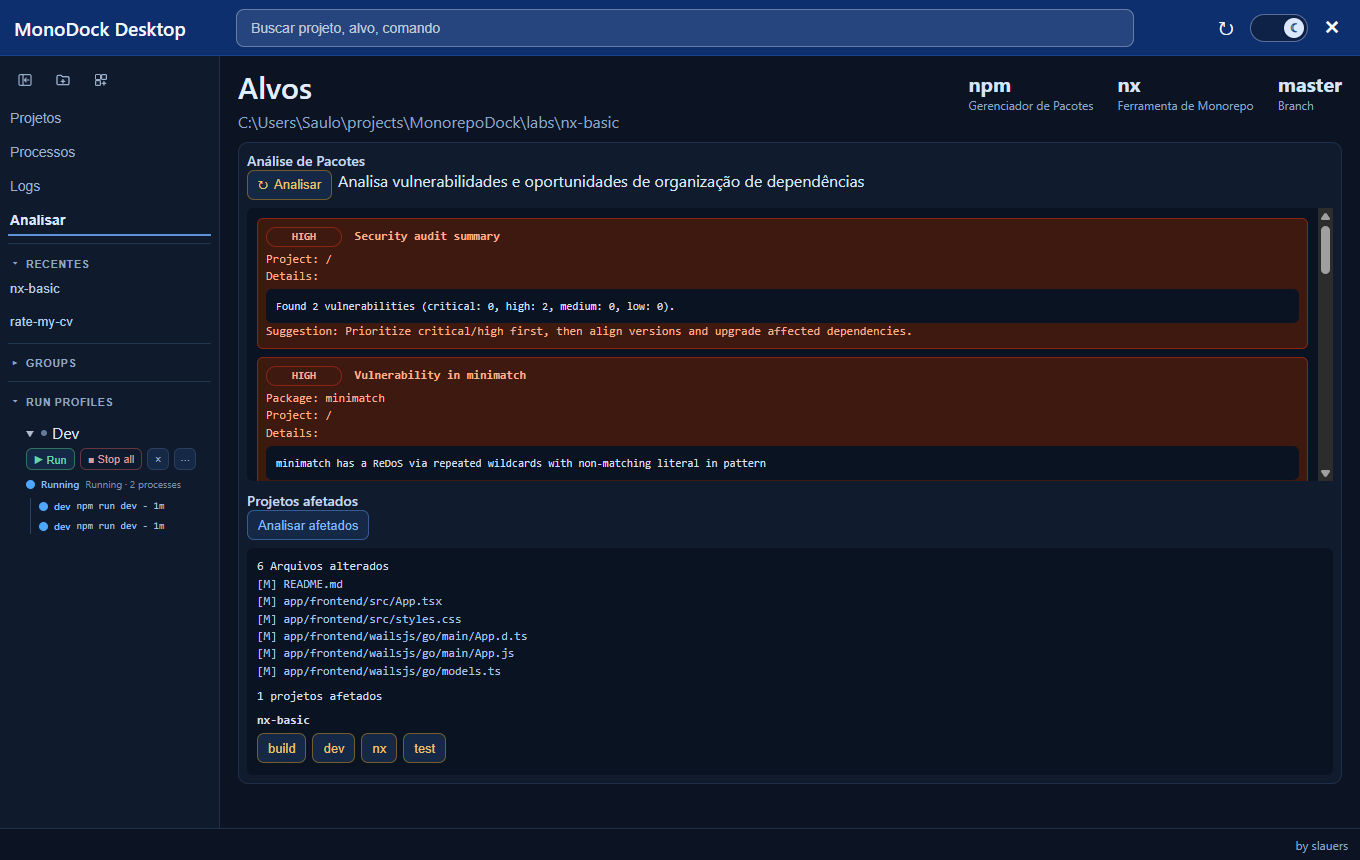
MonoDock main workspace
Features

Your monorepo finally has a control panel.

Most monorepo workflows become a collection of shell history, terminal tabs, sticky notes, and emotional damage. MonoDock centralizes the runtime layer into one desktop experience.

Run targets visually

Execute workspace targets without memorizing commands or juggling terminal windows.

Process orchestration

Start, stop, restart, and inspect processes from a unified runtime view.

Run profiles

Group multiple targets into reusable runtime profiles like dev environments, workers, or test stacks.

Live logs

Stream logs in real time with process tabs, status indicators, and copy support.

Session restore

Recover previous running sessions after reopening the app, because developers deserve rights too.

Workspace analysis

Inspect vulnerabilities, dependency inconsistencies, and hoist opportunities visually.
Runtime

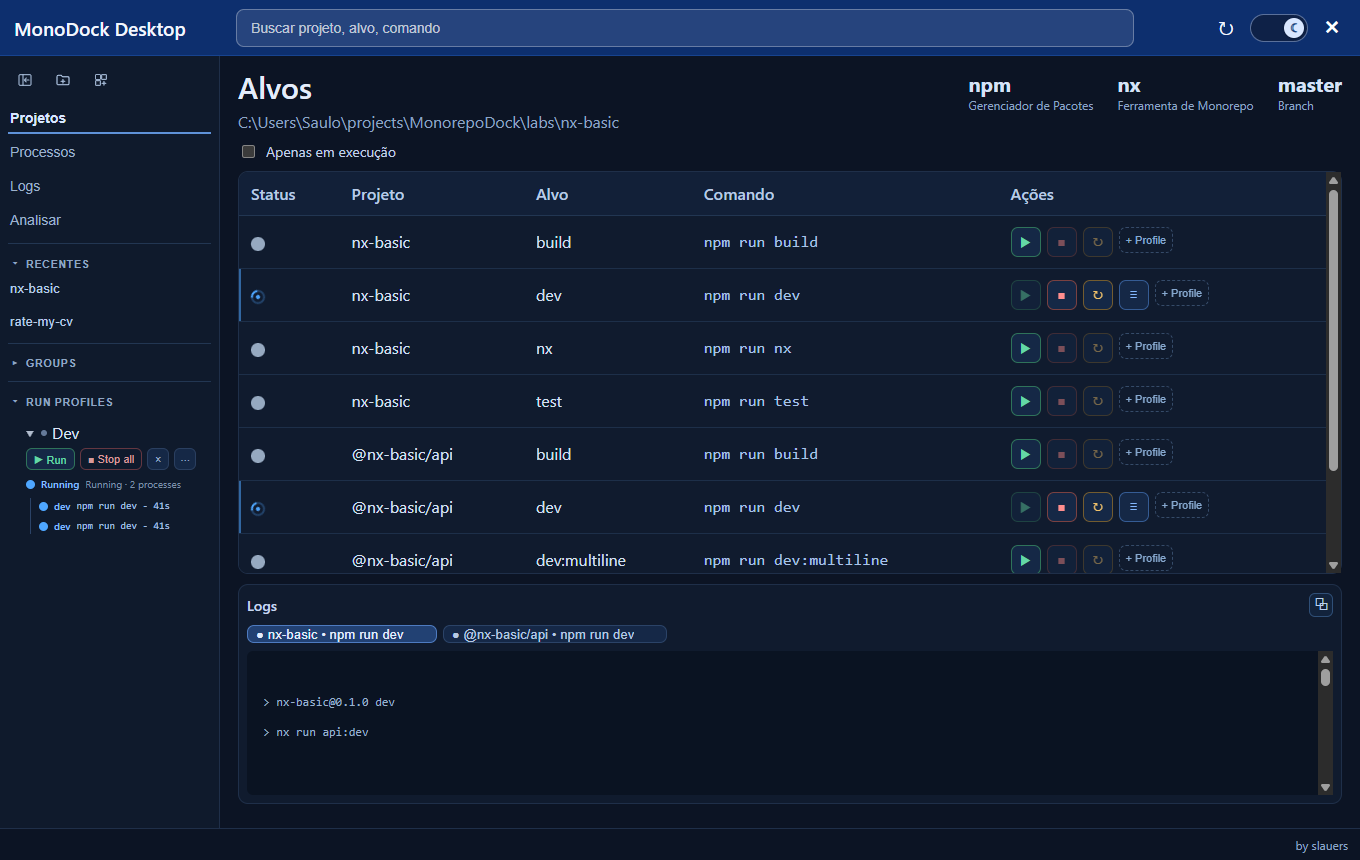
See what is running. Restore what matters.

MonoDock keeps processes, profiles, logs, and runtime states visible in one place, so your workspace stops behaving like a haunted terminal multiplexer.

MonoDock runtime and logs
Philosophy

Built for workflows. Not for screenshots.

MonoDock is intentionally focused. The goal is not to become another overloaded IDE. It exists to make monorepo runtime management faster, clearer, and less annoying.

Visual runtime

Processes should be observable without requiring six terminal panes and a memory palace.

One-click workflows

Start environments quickly without rebuilding your shell history every morning.

Focused desktop UX

Fewer layers. Faster actions. Less “where the hell is that option”.

Download

Try MonoDock

Free and open source. Built with Wails, Go, React, TypeScript, and an unreasonable amount of “this should probably be a real product”.